



When King Bacot took the floor in the starting lineup for Petersburg High School in the Virginia state championship game, it was in front of a sellout crowd and his coaches sported matching burgundy suits.
King was already used to a big-time basketball atmosphere. He has multiple recruiting offers from Division 1 schools, a manager and more than 100,000 followers on Instagram. He’s received endorsement offers and has traveled all over the country for basketball tournaments, workouts and gym sessions with NBA trainers.
He’s also a 15-year-old freshman.
The last time Petersburg won a title game was 52 years ago, when reporters from all over the country marveled at their 6-foot-10, 19-year-old senior superstar named Moses Malone. After leading his team to back-to-back undefeated championship seasons, Malone upended college and pro basketball alike by taking a seven-year, $3 million deal with the Utah Stars of the American Basketball Association — making him the first modern player to jump from high school to the pros.
King is many things, at a young age, but he’s not Moses Malone. He was not even the flashiest player on his own Petersburg team — that would be senior Latrell Allmond, a McDonald’s All-American headed to Oklahoma State. In the championship game, Allmond put up 15 points, 8 rebounds and 4 blocks in a 56–35 victory over Lake Taylor. King scored only 9, while busily directing traffic and delivering the ball to his go-getting teammates. Some writeups of the game left him out entirely.
King doesn’t need to be a legend just yet. As one of the top-ranked players in the high-school class of 2029, he’s already part of a professional-style network of fame, opportunity and obligation. He arrived at Petersburg along with its new head coach, Ty White, who was not only an established championship high school coach but the head of a powerhouse AAU squad called Team Loaded, whose teen superstars joined the new program at Petersburg.
In season, King said he leaves for the gym at 6 a.m., goes to school, goes to the gym again, and then gets home again around 10 p.m. He was hosting back-to-school giveaways and signing autographs when he was in middle school. Now, he’s in negotiations to sign a paid endorsement deal with a major shoe company.
“The phone rings all the time,” said Joya Bacot, King’s mother. “It could be schools, it could be brands, it could be anybody that wants King to be a part of what they got going on.”
For a teen star like King, the chasm that Malone once had to hurdle between the Petersburg High School varsity team and professional basketball has been replaced by something more like a tricky but continuous series of conveyor belts. Players used to be required to serve long apprenticeships as amateurs before getting paid for their abilities: playing local high school and AAU ball, or possibly being recruited to a regional powerhouse private school, and then moving on to an unpaid commitment to a college program before eventually, possibly, getting drafted the NBA, or making their way to an overseas pro league.
Now, that sequence has collapsed. Over the course of the past decade, college players secured the right to receive sponsorship money, booster funds and a share of athletic revenue for themselves. At the same time, they began hopping or being pushed from school to school through the NCAA’s transfer portal en masse, following money or on-court opportunity. College basketball is a professional sport in its own right, with the best players earning seven figures.
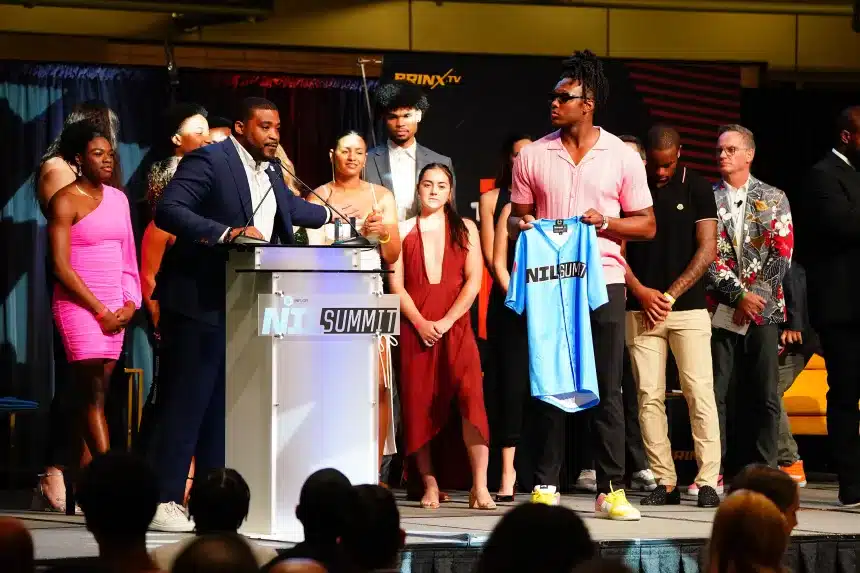
NIL Summit/USA Today Network/Reuters
And the level of basketball below has been transformed as well. Players still in secondary school are now potentially eligible, like college players, to sign lucrative Name, Image and Likeness sponsorship contracts. Elite or maybe-elite prospects can pursue stardom and experience in an ever-expanding array of programs: not just AAU and conventional high schools, but basketball-first prep schools and outright sports academies.
While specific rules vary by state, and not every high school can offer NIL deals, it’s become common for players to not only move high schools, but to even move from state to state, all in pursuit of the best basketball program that will offer them the most college recruiting eyes, the best facilities and the most money.
Tyran Stokes, hailed as the top prospect in the high school class of 2026, has bounced up and down the West Coast, attending three different high schools in four years, while fans on Reddit scrutinize his performance and national media agonize over his oscillating college decision. AJ Dybantsa — who finished his freshman and presumably only season at Brigham Young University scoring 35 points in a first-round NCAA tournament loss — spent his high school years going from Massachusetts to California to Utah, where he completed his senior year at Utah Prep and was reportedly paid a landmark $600,000.
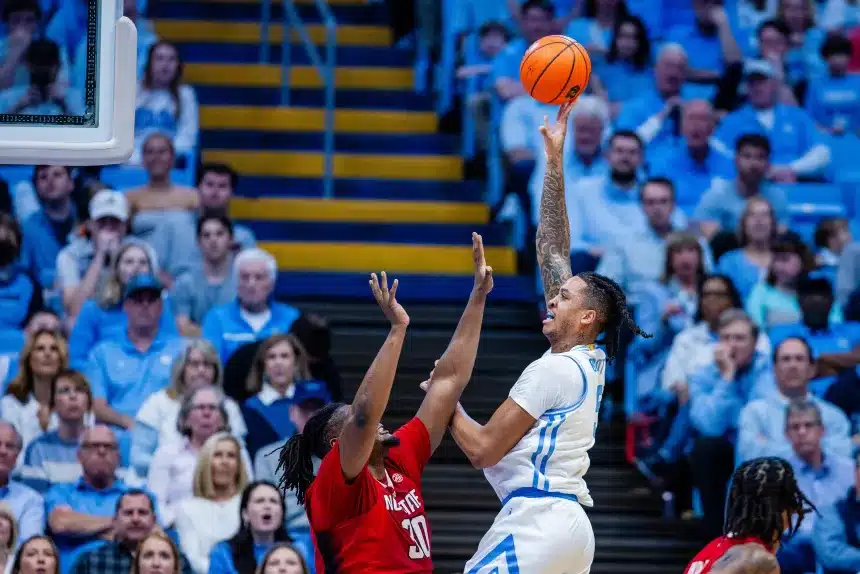
King’s older brother Armando Bacot Jr. played for Trinity Episcopal in his hometown of Richmond for three years, before transferring to Florida’s IMG Academy for his final year to prepare for college. From there, he went to the University of North Carolina, where he carried the team to the national title game as a junior and then stayed around for two more years, becoming the Tar Heels’ all-time leading rebounder and collecting lavish sponsorship deals.
Scott Kinser/USA Today Sports/Reuters


